
Printing for cafés and restaurants — what should you order?
In the food and hospitality business, taste matters. But long before a guest tries their first dish or takes a sip of coffee, they notice dozens of other details. The sign above the entrance, a restaurant menu, a seasonal offer card, a coaster, takeaway packaging or a business card included with the order — all of these elements shape how the brand is perceived.
That’s why printing for cafés and restaurants shouldn’t be treated as a collection of random materials ordered only when something runs out. Well-planned printed materials help create a consistent image for the venue, support sales and make the brand more memorable, even after the customer has left the restaurant. A consistent visual identity brings all these touchpoints together, turning them into parts of one recognisable system.
So, what is really worth ordering? Which materials are essential, and which can help boost sales or make your venue stand out from the competition? We’ve put together a practical list.
Menu — the most important printed material in a restaurant or café
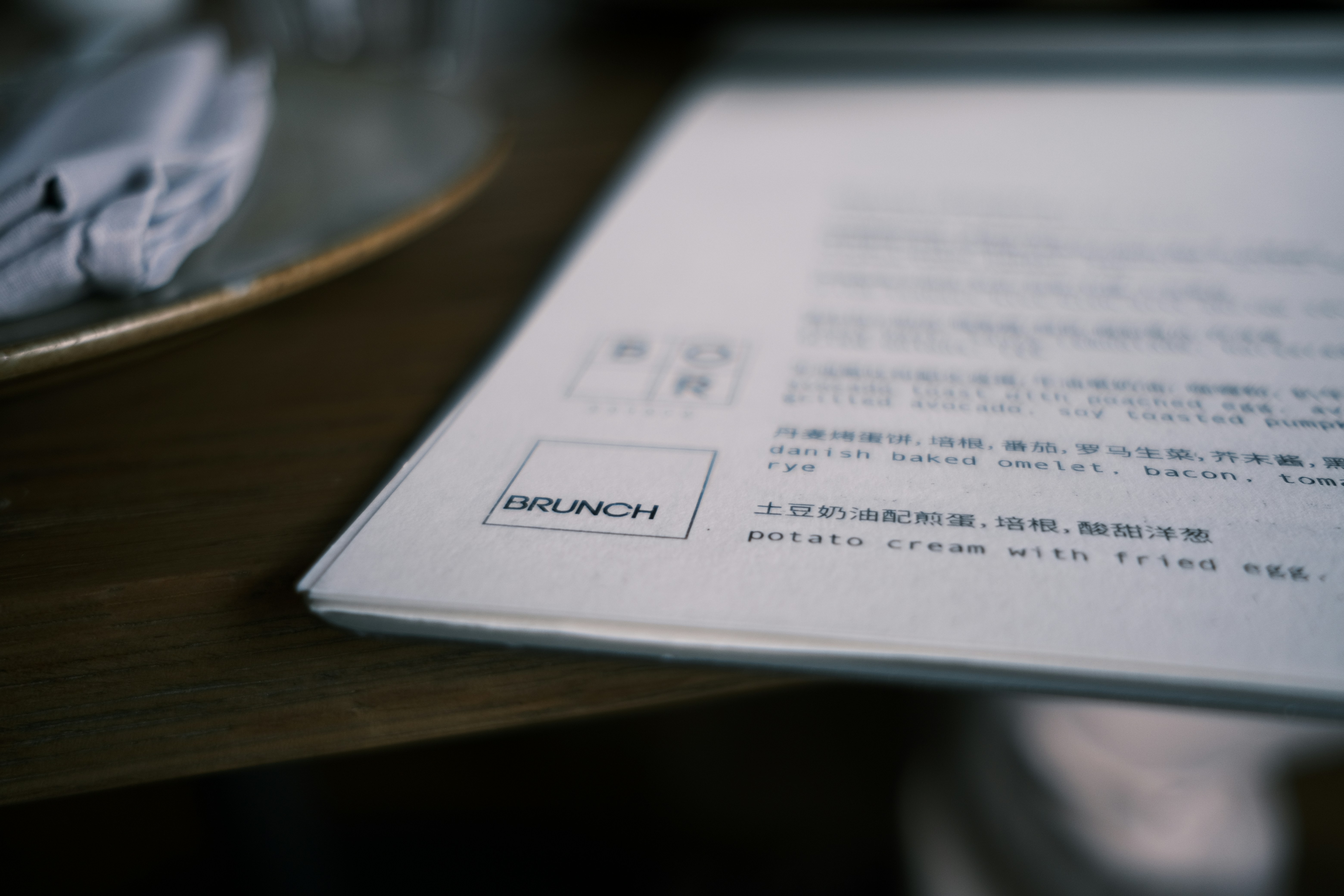
It’s hard to start with anything else. A menu is one of the printed materials that guests handle most often in any restaurant, café, bakery or bar. Customers may hold it for several minutes, comparing options, reading descriptions and using them to decide what to order.
That means that both a restaurant menu and a café menu need to be not only attractive, but above all, easy to read.
A font that is too small, insufficient spacing, a chaotic information hierarchy or an excess of decorative elements can make it harder for guests to choose. A well-thought-out design, on the other hand, helps them quickly find the categories they are looking for and draws attention to the items the place particularly wants to promote.
The way a menu is made should also depend on how it will be used. An elegant restaurant may need completely different paper and finishing than a small café that frequently changes its selection. If a menu is used intensively, durability should be a priority. If the offering changes several times a year, it’s important to be able to print updated versions easily and cost-effectively.
Professional menu printing should take into account not only the look of the design, but also how often it will be replaced, the conditions in which it will be used and the character of the restaurant or café.
It’s also good practice to order a few extra copies. Menus are used every day — they can get dirty, damaged or simply go missing.
Seasonal menus and add-on cards for the main menu
Not every change to the offering means redesigning and reprinting the entire menu.
In summer, you might add lemonades and cold brew; in autumn, pumpkin coffee; in winter, hot seasonal drinks and special desserts. For Valentine’s Day or other holidays, a restaurant may also prepare special sets. In situations like these, separate seasonal cards and add-on cards for the main menu work particularly well.
It’s a simple way to highlight a temporary offering without having to change the main menu.
A small card placed on the table can also act as an extra salesperson. A guest who wasn’t planning to order dessert may change their mind after seeing an attractive card featuring a new cheesecake, tiramisu or seasonal coffee.
That’s why it’s worth seeing these materials as more than just a way to provide information. Well-designed printed materials can actively support the sale of additional products.
Business cards — a small format that still makes sense
Do restaurants and cafés still need business cards? Absolutely, although their role has changed somewhat over time.
They no longer need to contain just an address and phone number. A business card can also serve as a small piece of promotional material that customers can take with them.
It can include opening hours, a website address, a social media handle or a QR code linking to a table reservation system, online menu or order form.
Another good idea is to use the back of the card to give customers a simple reason to come back. At the same time, there’s no need to cram too much information onto such a small card. The simpler the message, the more likely it is to be noticed and remembered.
Flyers for restaurants and cafés
Well-designed flyers can still effectively promote a local restaurant or café — as long as they have a clear purpose.
Simply printing a logo, address and a phrase like “You’re welcome” is usually not enough. Customers should immediately understand why they should keep the flyer or visit the restaurant.
A flyer can promote a lunch deal, delivery service, new menu, restaurant opening, catering, breakfast options or a special promotion.You can include flyers with takeaway orders, hand them out at local events or leave them in places where potential customers are likely to see them.
One particularly effective option is to include flyers with delivery orders. The customer is already familiar with the restaurant and has just placed an order, so there’s no need to convince them of the brand’s value from scratch. Instead, the flyer can encourage them to place another order, visit the restaurant or explore another part of what it has to offer.
Loyalty cards — a simple way to encourage customers to come back
Cafés are practically made for loyalty programmes. Customers buy coffee regularly, so a simple “buy a few, get the next one free” system is easy to understand and doesn’t require a complicated app.
A printed loyalty card has another advantage: it provides a physical reminder of the café. Seeing the card in their wallet may remind customers to come back.
There’s no need to limit this approach to coffee. The same idea can work well for a bakery, confectionery, ice cream shop or restaurant with regular lunch specials.
The card design should be simple. Customers should immediately understand how the programme works, know how many stamps they need to collect and what they will receive once the card is complete.
Coasters for cups and glasses
A coaster for coffee, a cocktail or a beer may seem like a small detail, but details like these help create a consistent image for a restaurant or café. Depending on the character of the restaurant or café, you might choose elegant coffee coasters or custom-printed beer coasters designed specifically for the brand.
They can feature a logo, a distinctive illustration, a short slogan or another element of the brand’s visual identity. This way, even an ordinary cup on the table becomes part of a carefully considered brand presentation.
Coasters also serve a practical purpose by protecting the table surface. In this way, they combine functionality with advertising.
However, there’s no need to turn them into miniature flyers and fill them with text. With such a small format, one strong graphic element is far more effective than several messages competing for attention.
Paper placemats
In restaurants and cafés that serve a large number of customers, paper placemats can also be a great option. They can protect the table surface, while their larger size offers many more possibilities.
They can feature a breakfast menu, lunch specials, the story behind the restaurant, interesting facts about the products or information about seasonal items.
In a family restaurant, a paper placemat could include a simple game for children; in a specialty coffee shop, a short introduction to the coffee’s origins; and in a restaurant serving regional cuisine, a few interesting facts about its ingredients and traditions.
The most effective printed materials for the food and hospitality industry often serve several purposes at once. Paper placemats can protect the table surface, reinforce the brand’s visual identity and act as a subtle form of advertising.
Stickers — one product, endless uses
Stickers are one of the most versatile types of printed materials in the food and hospitality industry.
They can be used to seal paper bags, label boxes, decorate cups, secure delivery packaging or add elements of the brand’s visual identity to simple, neutral packaging. This way, even an ordinary coffee cup with a logo or branded sticker becomes a recognisable part of the restaurant or café’s brand communication.
The latter option is particularly practical for small businesses. Instead of ordering large quantities of packaging specially made for the brand, they can use standard boxes, cups or bags and personalise them with a well-designed sticker.
A sticker can feature just the logo, but it doesn’t have to. You can create several versions — for example, “Thank you”, “Enjoy your meal”, “Baked today” or labels for individual products.
This makes it possible to give packaging a more distinctive, personalised feel at a relatively low cost.
Product labels
If a café or restaurant sells its own products — coffee beans, biscuits, fruit preserves, sauces, baked goods, tea blends or other items — it will also need well-designed labels.
These might include coffee labels, labels for tea packaging, sauce bottles, or jars of preserves and other products.
Here, aesthetics need to go hand in hand with functionality.
The label should suit the packaging and remain easy to read. It should also include all the information required for that particular type of product. That’s why you should decide on the packaging size and required information before creating the label design.
A cohesive series of labels can make even a small product range look like a fully developed brand.
Packaging and materials for takeaway orders
For many customers, their interaction with a restaurant now happens outside the restaurant itself. They order food for takeaway or delivery, buy coffee to go or take dessert home.
In these cases, packaging partly takes on the role that the interior plays inside the restaurant.
A bag, box, wrapper, sticker or add-on card can all shape the customer’s first impression when they receive their order. Consistent materials help the brand look professional even outside the restaurant.
It’s also worth thinking about what happens after the customer opens the package. A small thank-you card can include a QR code leading to the menu, social media profiles or a booking page. This is a natural opportunity to encourage the customer to interact with the brand again.
Vouchers and gift cards
A dinner for two, brunch, a tasting experience, a box of desserts or a set amount to spend at a restaurant can all make great gifts. That’s why it’s worth having printed vouchers ready to go.
A physical gift card looks much more appealing than simply sending a code in a message. It can be placed in an elegant envelope and given as a ready-made gift.
The design should reflect the character of the restaurant or café. For a premium restaurant, a minimalist design and high-quality paper can work well. A colourful cake shop, on the other hand, can use bolder, more expressive graphics.
It’s important to clearly state the terms of use and expiry date on the voucher, in line with the restaurant or café’s own policies.
Posters and promotional materials
New menu? Tasting night? Live music? A special weekend breakfast? A seasonal promotion?
Not every piece of information needs to go on the main menu. This is where posters, small information signs and other promotional materials can be useful.
They can be placed near the entrance, in the window, by the till or elsewhere in the restaurant or café. Their purpose is to communicate one key message quickly.
The key word is “one.”
A poster that people view from several metres away shouldn’t look like a newspaper page. A strong headline, the main information, the date and, if needed, the price or a call to action are usually enough.
QR code materials — connecting print with the online world
QR codes make it possible to connect traditional print with digital tools. They can be placed on menus, business cards, flyers, coasters, posters or packaging.
But the most important thing is where the QR code leads.
Simply writing “Scan the code” is not enough to motivate a customer to take out their phone. A specific message works much better: “View the latest menu”, “Book a table”, “Order online” or “See what’s new”.
Before printing, the code should always be tested on several devices. It’s also important to choose the right size and ensure sufficient contrast so that it can be scanned easily.
There’s one more practical rule: don’t use a QR code that leads to a page that will disappear in a few weeks. Printed materials are often used for much longer than originally planned.
Branded paper, envelopes and catering materials
A restaurant is about more than serving guests at tables. Restaurants that provide catering services or organise receptions, corporate events or weddings also need materials for professional communication.
An elegant proposal printed on branded paper, along with a matching envelope or document folder, can look much more professional than a random sheet printed on an office printer.
This is especially important for larger orders. If a client is planning an event for several dozen people, the way the proposal is presented also affects how they perceive the quality of the service.
Don’t order everything at once — start with what your business needs
There are plenty of options, but that doesn’t mean every café needs to order ten different products right away.
A small business focused mainly on takeaway coffee may need menus, stickers, loyalty cards, branded cups and packaging materials most of all. A full-service restaurant may focus on menus, seasonal add-on cards, vouchers and tabletop materials. A catering company will need a different set of materials altogether.
The best place to start is with a few simple questions:
– Which printed materials do customers interact with most often?
– Which of them influence their purchasing decisions?
– What does the customer take away with them?
– How often does the offering change?
– Which materials wear out quickly?
– Where could print be used to encourage the customer to make another purchase?
The answers will help you set priorities and avoid ordering materials that then sit in storage for months.
Consistency matters more than the number of materials
A menu can look great. So can a sticker. And a business card. The problem starts when each of these products looks as if it belongs to a different company.
Printed materials should form a consistent visual system. Consistent colours, typography, photography or illustration styles, logo usage and a similar tone of voice make the brand easier to recognise.
This doesn’t mean that every material has to look exactly the same. It’s about visual consistency and a carefully planned approach to restaurant branding.
A restaurant’s visual identity should cover more than just its logo and interior; it should also be reflected in its menus, packaging, promotional materials and all printed materials customers come into contact with. Likewise, a café’s visual identity should be visible on cups, loyalty cards, labels, coasters and materials used for takeaway orders.
Customers should be able to see a package, flyer or card and immediately associate it with the restaurant or café they have visited.
If the team prepares its own materials and is responsible for the brand’s communication, branding training can also be useful. It can show employees how to use individual elements of the visual identity consistently.
Print quality also shapes the customer experience
In the food and hospitality industry, the customer experience is made up of countless small details. A great dish served on a chipped plate loses some of its appeal. Likewise, an elegant interior doesn’t go well with a menu printed on cheap, unsuitable paper that quickly wears out.
That’s why, when choosing materials, it’s important to consider not only the design, but also the paper, weight, format, finishing and intended use of each product.
A menu used by hundreds of people every day requires one solution, while a voucher given as a gift may require something completely different.
Choosing the right printing method and materials can also help keep costs under control. The most expensive option isn’t always the best one. The best solution is the one that matches how the particular product will be used.
What should you order from a print shop for a café or restaurant?
There is no single, universal set of printed materials that works for every business in the food and hospitality industry. However, there are a few that can be useful for most restaurants and cafés: menus, seasonal cards, flyers, business cards, stickers, labels, tabletop materials, vouchers, posters and materials for takeaway orders.
The most important thing is that each one serves a clear purpose.
Print can provide information, support sales, keep the brand in customers’ minds, encourage them to come back or simply make the overall customer experience more thoughtful. It works best when all materials are planned as part of one visual identity rather than ordered separately whenever something runs out.
If you’re planning to open a new restaurant or café, updating its visual identity or simply organising the materials you use every day, start by making a list of the most important points where customers interact with your brand. This makes it much easier to decide what to print first, which format to choose and which materials can genuinely support sales.
At Four zeros, you can prepare printed materials tailored to the character of your café, restaurant or other food business — from essential printed materials to items that support promotion and create a consistent brand image. After all, good print in the food and hospitality industry shouldn’t be just an aesthetic addition. It should serve a clear purpose and do its job effectively.
Multilayer business cards – when paper alone creates a “wow" effect
In the age of digital tools, automation, and LinkedIn, paper business cards might seem outdated. But that’s just an illusion. The true power of print lies in its physical presence: the touch, the texture, the weight. Nothing leaves a lasting impression quite like an elegant, thick business card that stands out. Especially when it comes to printing 2- or 3-layer cards, which do more than share your contact details – they enhance your brand’s image and prestige
In this article, we’ll explore what multilayer business cards are, their key advantages, when they’re worth ordering, and why you can trust Four zeros print centre to bring them to life.
What are 2- and 3-layer business cards?
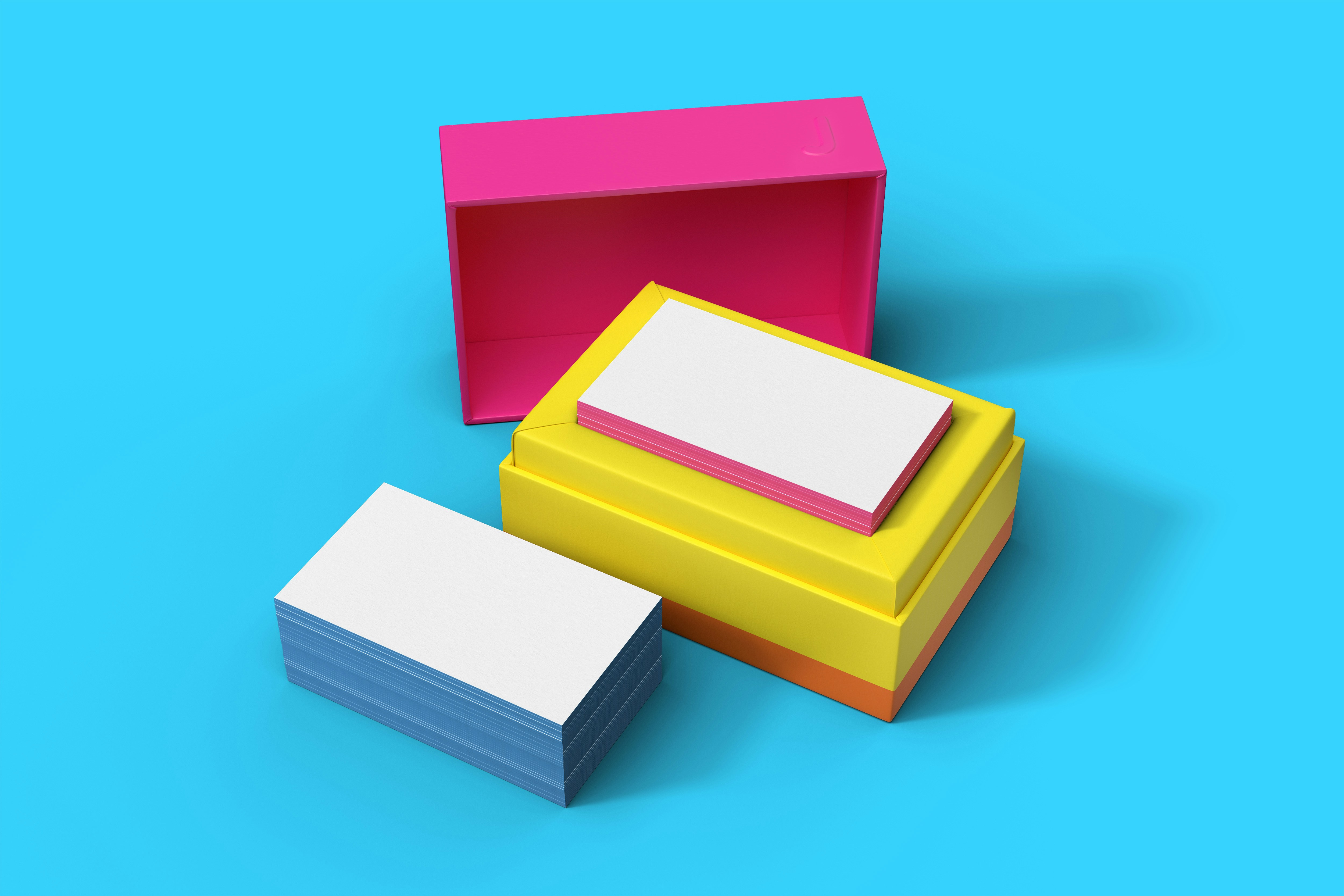
Multilayer business cards (also known as bonded or sandwich business cards) are printed products made up of two or three sheets of paper glued together. They’re typically much thicker than standard cards, with a weight ranging from 600 to even 1000 gsm.
What sets them apart isn’t just their weight, but their customisation potential:
- a coloured middle layer (also known as the “core” or “sandwich” layer),
- a mix of different paper types,
- premium finishes such as soft-touch lamination, spot UV coating, or foil stamping.
A multilayer business card is more than just a contact holder. It says: “I’m a professional. I care about the details. My brand is next-level.”
When to choose multilayer business cards
Not sure if 3-layer business cards are right for you? If making a strong first impression matters, then the answer is a definite yes.
Here are situations where a multilayer card is the perfect choice:
- High-level business meetings – Show that you’re playing in the premium league.
- Creative and luxury industries – architects, designers, jewelers, and high-end consultants.
- Trade shows and industry events – Stand out among hundreds of standard cards.
- Company launches or rebranding – Make your card a symbol of change.
- First contact with a VIP client – Show you care from the very first moment.
Remember: a business card isn’t an expense. It’s an investment in first impressions.
Advantages of multilayer business cards
Compared to standard cards, 2- and 3-layer options offer several unique advantages:
- Prestige – A clear (and tactile) difference in quality.
- Durability – Thicker material better withstands wear and tear.
- Design impact – A colourful core makes a lasting impression.
- Exclusivity – Few people invest in such premium products, putting you one step ahead.
- Print and finish flexibility – Matte or glossy films, foil stamping, spot UV, and 3D effects.
A small piece of paper that says a lot about who you are.
How a 3-layer business card is made: step by step
1. Paper selection
Each layer can have its own colour and texture. The most commonly used paper weights range from 250 to 350 gsm.
Popular options include:
- Coated white paper
- Eco kraft paper (brown)
- Dyed-through paper (black, red, navy blue)
2. Graphic layout
Prepared in CMYK colour mode, with proper safety margins. Decide whether you want single- or double-sided printing.
3. Printing and bonding
After printing, the layers are glued together under high pressure. Drying time for the adhesive is several hours. The process is more complex than for regular business cards.
4. Trimming and finishing
Once bonded, the cards are trimmed to size. This is when you can add extras like spot UV, foil stamping, or soft-touch lamination.
Note: Not every layout suits this type of card. We recommend consulting the Four zeros team to avoid production issues.
Design that works – inspiration
Want to know what really wows? Here are a few trends and ideas to consider:
- Minimalism + coloured core – White background, black font (e.g. Helvetica), neon pink middle layer.
- Black + gold – Matte black card with shiny gold logo and a black inner core – a premium classic.
- Kraft + green – An eco-conscious image for meaningful brands.
- Soft touch + 3D spot UV – Modernity and luxury in one.
Why order your multilayer cards from Four zeros?
We’re a print centre focused on quality. Four zeros is not just about machines – it’s a team passionate about creating the perfect product.
What we offer:
- Expert advice on paper and finishes
- Custom quotes and a personal approach
- Precision trimming and bonding
- Option to create a sample
- Fast turnaround
- Printing in Warsaw and delivery across Poland
Conclusion
Multilayer business cards aren’t just about contact details. They’re about emotion, quality, and style.
In a world where everyone has an email and a LinkedIn profile, a printed card can still create that rare “wow” moment.
Want to impress, stand out, and leave a powerful, lasting impression? Then this card is for you.
Get in touch with us today – and let your card speak before you even say “hello.”
Four zeros – where business cards become a tool for success.
UV Printing technology in large-format materials - the future of advertising before your eyes
In today’s world of visual communication, where quality, durability, and speed matter most, UV printing technology is rapidly gaining ground, especially in large-format printing. This innovative method is transforming how we approach advertising on expansive surfaces, from banners and signage to interior decor.
In this article, you’ll learn what large-format UV printing is, its key advantages, where it works best, and why Four zeros is the perfect place to bring your ideas to life in Warsaw and across Poland.
What is UV printing technology?
UV (ultraviolet) printing is a modern technique where inks are instantly cured using ultraviolet light. This means there’s no drying time, and the printed product is ready to use immediately.
What makes it stand out?
✅ No need for laminating – the print is resistant to moisture, abrasion, and sunlight.
✅ Vivid, saturated colors and high image definition.
✅ Compatible with a wide range of materials – both rigid and flexible.
It’s these very advantages that make UV printing a perfect fit for large-format projects, where efficiency and visual impact are key.
What does large-format UV printing mean?
Large-format UV printing refers to the use of UV technology to print on large surfaces. With advanced equipment, it's possible to print on materials several meters wide without compromising quality and with high resistance to external factors.
Popular materials include:
📌 Foamed PVC
📌 Dibond (aluminum composite)
📌 Glass
📌 Plexiglass
📌 Self-adhesive films
📌 Canvas
📌 Frontlit and blockout banners
These capabilities make UV large-format printing ideal for outdoor advertising, interior design, exhibition stands, and urban branding.
Advantages of large-format UV printing
Large-format UV printing offers more than just durability, it delivers a strong visual impact. Key benefits include:
✅ Long-lasting – withstands moisture, UV exposure, and temperature changes.
✅ Vibrant color and detail – prints stay sharp, even at large scales.
✅ Eco-friendly – LED UV technology is solvent-free and safer for the environment.
✅ Works on complex surfaces – including glass, metal, wood, plastic, and more.
✅ White ink printing capability – ideal for transparent or dark materials.
This versatility allows for the creation of not only advertising materials but also artistic interior elements and industrial signage.
LED UV printing technology – a new quality standard
At Four zeros, we use LED UV printing, which is an even more efficient and eco-conscious evolution of the technology. Its benefits include:
✅ Lower energy consumption
✅ No overheating of materials
✅ Longer-lasting UV lamps
✅ Suitable for thin and delicate materials
LED UV printing is one of the most advanced methods on the market: precise, fast, and environmentally friendly.
Large-format UV printing in Warsaw – where to print?
Looking for an experienced print centre offering UV printing in Warsaw? Welcome to Four zeros . We manage projects with full support – from file preparation to installation.
We also serve clients across Poland, so if you’re looking for large-format UV printing in Warsaw or all over the country, we can arrange delivery or offer tailored solutions.
What we offer:
✔ Consultations and a personalized approach
✔ Fast turnaround
✔ Test prints
✔ Design and file support
✔ Additional services: cutting, laminating, installation
Where is large-format UV printing used?
UV printing is incredibly versatile. Common applications include:
Advertising and informational signs – durable and weather-resistant
Glass decor and wall graphics – printed directly onto glass or plastic
Trade show and POS materials – mobile stands, display units
Vehicle and urban infrastructure branding
Art prints – limited editions, artworks on rigid media
Conclusion
UV printing has redefined the possibilities of large-format printing, allowing you to create long-lasting, vibrant, and environmentally resistant visuals on nearly any surface.
Whether you need:
✅ Large-format UV printing in Warsaw
✅ UV printing in Rzeszów
✅ Printing on PVC, glass, metal, plexiglass, or Dibond –
Four Zeros is your go-to partner.
We’re experts in innovative printing, ready to turn your ideas into visual reality quickly, professionally, and with attention to every detail.
📞 Message or call us and see what true large-format printing looks like with UV technology!

A new machine, new possibilities!
A new machine, new possibilities!
Mimaki UV UJF-6042 MkII – enhanced UV printing at our Warsaw print center!
At Four zeros, we are constantly improving our capabilities to deliver top-tier services to our clients. We’re excited to announce that our equipment lineup now includes the advanced printer - Mimaki UV UJF-6042 MkII. With this cutting-edge machine, we can offer even higher quality, greater precision, and a broader range of UV printing applications.
Mimaki UV UJF-6042 MkII – What this machine offers?
The Mimaki UV UJF-6042 MkII is one of the most advanced UV printing machines designed for professional printing on a wide variety of materials. Its innovative UV digital printing technology allows printing on flat surfaces, slightly curved ones, and even materials with unique textures.
What sets the Mimaki UV UJF-6042 MkII apart?
- High Precision: Printing with resolutions up to 1200 dpi ensures sharpness and precise detail.
- Versatility: Compatible with materials such as plastic, wood, glass, metal, PVC, plywood, and many more.
- Eco-friendliness: Support for UV waterless printing processes ensures minimal resource usage and environmentally conscious production.
New possibilities with Mimaki UV UJF-6042 MkII
The acquisition of this machine opens up new horizons for our printing center. Here are a few examples of how we're using the potential of this equipment:
UV printing on plastic and glass
UV printing on plastic (acrylic) offers the perfect solution for creating backlit signs, elegant plaques, or interior decor.
UV printing on glass enables the creation of unique projects, such as kitchen panels, decorative doors, or office decor elements.
UV printing on wood and plywood
Natural materials such as wood and plywood take on a new life with UV technology. UV printing on wood is ideal for personalizing furniture, signs, or decor, while UV printing on plywood is perfect for creating decorative panels or promotional souvenirs.
UV printing on metal and PVC
Thanks to our new machine, we can now print on durable materials like metal and PVC. UV printing on metal is an excellent choice for creating informational signs, billboards, or industrial-style decor elements. UV printing on PVC is well-suited for producing advertising materials for both outdoor and indoor use.
Advantages of UV printing with the new machine
- Higher precision
The Mimaki UV UJF-6042 MkII offers exceptional print quality, even for the most complex projects. - Expanded personalization options
The advanced technology enables printing on various surfaces, such as glass, wood, and metal, providing possibilities for realizing unique ideas. - Eco-friendliness
Waterless UV printing minimizes the use of water and chemicals, making the process more environmentally friendly.
UV printing in Warsaw – welcome to Four zeros!
If you're looking for professional UV printing services in Warsaw, Four zeros is the place where your expectations will be met. With our new Mimaki UV UJF-6042 MkII machine, we can tackle even the most complex projects, delivering excellent quality and timely execution.
We invite you to collaborate with us! Whether you need UV printing on glass in Warsaw or printing on metal, wood, or plastic, our team is ready to help you create unique and durable printed products.
Contact us today and discover the possibilities of modern UV printing at our printing center!
To learn more about UV printing and its features, read our article.

What is UV printing and what are its advantages?
UV printing is one of the most cutting-edge technologies in the printing industry, steadily gaining popularity. Thanks to its versatility and high quality, it is used in various fields — from advertising and decor to industrial production. In this article, we will explain what UV printing is and highlight its key advantages. You’ll also learn where to order UV printing in Warsaw and which materials it can be applied to.
What is UV Printing?
UV printing is a digital printing technology that uses special inks cured by ultraviolet radiation. The process involves applying ink to the surface of a material, which is then instantly set using UV lamps. This results in prints that are durable, resistant to mechanical damage, moisture, and sunlight.
Key features of UV printing:
- The ability to print on various materials, such as wood, glass, plastic, metal, or plywood.
- High precision and quality.
- Fast execution, even for large orders.
Digital UV printing vs. Traditional printing methods
Digital UV printing offers several key advantages over traditional methods:
- Direct printing – eliminates the need for printing plates, significantly reducing production time.
- Durability – UV-cured inks provide exceptional resistance to scratches and fading.
- Versatility – allows printing on a wide range of surfaces, including flat and slightly curved ones.
What materials can be used for UV printing?
One of the main advantages of UV printing is its versatility. Here are the most popular materials suitable for UV printing:
UV printing on plastic (acrylic)
Acrylic is an ideal material for UV printing on plastic, widely used in advertising (e.g., illuminated signs, stands) and interior decor. UV printing produces vibrant colors and highly detailed images.
UV Printing on glass
UV printing on glass is very popular in Warsaw for interior decoration. It is perfect for kitchens, bathrooms, or office decor. Images on glass are highly resistant to moisture and are long-lasting.
UV Printing on wood
UV printing on wood provides the opportunity to personalize natural materials such as boards, panels, or furniture. It’s a great solution for creating unique decorations or original gifts.
UV Printing on metal
UV printing on metal is ideal for creating informational and advertising signs, or decorative elements in an industrial style. This technology guarantees durability and excellent image quality.
UV Printing on plywood
Plywood is a popular material in the decor industry. UV printing on plywood is great for creating unique wall panels, stands, or personalized souvenirs.
UV Printing on PVC
PVC is a lightweight yet durable material that is perfect for both outdoor and indoor advertising. UV printing on PVC is ideal for banners, signs, or posters.
Advantages of UV printing
1. Versatility
UV printing works on a wide range of surfaces — from smooth to textured. You can print on glass, wood, metal, PVC, or even walls.
2. Durability
UV waterless printing provides exceptional resistance to abrasion, moisture, and ultraviolet rays. This makes it ideal for outdoor applications.
3. Aesthetics
The UV technology ensures vibrant colors, high precision, and the ability to create 3D effects that add depth and appeal to projects.
4. Eco-friendliness
UV printing is more environmentally friendly compared to traditional methods, as the ink curing process requires less energy and produces no harmful waste.
UV printing on walls – a modern approach to decor
UV printing on walls is an innovative solution for creating unique decor in offices, residential spaces, or commercial areas. With this technology, it’s possible to print images directly onto walls, giving the space a modern appearance.
UV printing equipment – how does it work?
Modern UV printing machines allow for high-precision image application on various materials. The key components of the machine include:
- Print heads that apply the ink.
- UV lamps that instantly cure the ink after it’s applied.
Thanks to advanced technology, UV printing equipment can execute even the most complex projects in a short time.
UV printing in Warsaw – where to order?
If you're looking for UV printing services in Warsaw, Four zeros is the place to go. We offer a wide range of services, including:
- UV printing on plastic (acrylic) and glass
- UV printing on wood, metal, and PVC
- Custom projects on plywood and other materials
With our experience and advanced technologies, we guarantee quality that will satisfy even the most discerning clients.
Conclusion
UV printing is an innovative technology that unlocks countless possibilities in advertising, decor, and personalization. With its durability, high quality, and versatility, UV digital printing can be applied to materials like plastic, glass, wood, metal, or PVC.
Four zeros is your trusted partner in bringing UV printing projects to life. Contact us to discuss your ideas and create unique printed products that captivate attention and highlight your individuality.

What services does Four zeros printing center offer?
Four zeros printing center specializes in a wide range of printing solutions designed to meet the needs of both individual clients and businesses. With the help of cutting-edge technology and a team of experienced professionals, we offer comprehensive services tailored to diverse requirements. In this article, we’ll outline our key offerings and explain essential terms related to the printing process
Offset Printing - what it is and where it is used
Offset printing is one of the most widely used printing technologies, especially popular for large print runs. The process involves transferring an image from a plate to paper via a rubber-covered cylinder. This method ensures high quality, even for complex graphic elements and vibrant colors.
Offset printing is commonly used in the production of marketing materials such as flyers, posters, catalogs, and brochures. Its main advantage lies in the low cost per unit for large quantities, making it ideal for companies running extensive advertising campaigns.
This service is most often ordered by advertising agencies, publishing houses, and companies organizing events. Offset printing is also used for magazines, booklets, and packaging, where high quality and color consistency in every copy are essential.
Digital Printing - what it is and what advantages it has
Digital printing is a technology that allows direct printing from computer files without the need to create printing plates. What is digital printing? It’s a modern solution that enables fast and flexible printing for small and medium runs. This makes the technology ideal for personalized projects such as:
- Business cards
- Invitations
- Small-run posters
- Photo books
One of the main advantages of digital printing is the ability to personalize each copy. For instance, companies can order customized invitations for business events or tailored offers for individual clients.
Digital printing is also a popular choice for individual customers who want to quickly and efficiently print their projects, such as photos, certificates, or personalized gift cards. With no minimum print run required, it’s an excellent solution for those who need a limited quantity of printed materials.
Latex Printing - what it is and why you should choose it
What is latex printing? It’s an eco-friendly technology that uses water-based inks, making the process both environmentally safe and capable of delivering high-quality, durable printed materials. Latex printing stands out for its resistance to weather conditions, making it ideal for both indoor and outdoor applications.
Typical uses of latex printing include:
- Advertising banners
- Window films
- Stickers
- Wallpapers
This technology is particularly popular in the advertising industry and among interior designers. Thanks to its durability and vibrant colors, latex printing is perfect for projects requiring high aesthetic standards and resistance to being worn out or UV exposure. For instance, shop owners often order window films for seasonal promotions, and interior designers use printed wallpapers to create unique spaces.
Scoring and Folding - what they are, and when they are used
The preparation of printed materials often requires additional finishing processes such as scoring and folding, which give materials a professional look and make them easier to use.
- What is scoring? It’s the process of creating grooves on paper or cardboard, allowing materials to be folded easily and neatly. Scoring is an essential step in producing invitations, folders, brochures, or packaging made from thick paper that could otherwise be damaged when folded improperly.
- What is folding? It’s the process of folding paper in a specific way, such as into accordion shapes, booklets, or brochures. This technique is commonly used for making postcards, maps, or promotional materials.
These services are often ordered by advertising agencies for event invitations or promotional brochures. Scoring and folding are also popular among publishers who value precision and aesthetic folding for catalogs or books.
Lamination - what it is and what it is used for
What is lamination? It’s the process of covering the surface of printed materials with a thin film (matte or glossy) that protects them from mechanical damage, moisture, and dirt. Lamination also enhances the aesthetic and professional appearance of the materials.
Lamination is most commonly used for:
- Business cards
- Catalog covers
- Restaurant menus
- Maps
- Promotional materials
This service is particularly popular in the hospitality industry, where menus need to withstand frequent handling and potential spills. Lamination is also widely used by companies participating in exhibitions or conferences to create durable and visually appealing promotional materials.
Why choose Four zeros printing center?
Four zeros printing center offers modern printing technologies combined with a personalized approach for every client. We ensure top-quality results at every stage—from project development to final printing.
Advantages of working with Four zeros:
- A wide range of services, including offset printing, digital printing, scoring, folding, lamination, and latex printing.
- The ability to handle both large print runs and small personalized projects.
- Professional consultation – we help you select the best technologies and materials to meet your needs.
Whether you need elegant business cards, durable promotional banners, or professionally crafted catalogs, Four zeros printing center guarantees the highest quality and timely delivery. Get in touch with us – choose between digital printing and offset printing, depending on your needs!

Digital and Offset Printing
What is Digital Printing and How Does it Differ from Offset Printing? Which Printing Method Should You Choose for Your Needs?
In today's fast-paced world, where visual communication and advertising play a crucial role in reaching clients, printing remains one of the most important tools for conveying information. From promotional materials, postcards, and banners to packaging and books, printed materials surround us everywhere.
However, not everyone understands the differences between various printing techniques, such as digital and offset printing. In this article, we will explain what digital printing is, its advantages and disadvantages, and compare it to offset printing to help you choose the right method for your needs.
The team of experts at Four zeros is happy to assist you in selecting the printing technique that best suits the requirements of your business or event.
What is Digital Printing?
Digital printing is a modern printing technology that involves directly transferring an image from a computer file to the printing material without the need for creating printing plates. This means that the printing process is significantly faster and more flexible compared to traditional methods. In practice, this allows for the printing of even single copies while maintaining high quality at our printing facility in Warsaw.
Digital Printing Technologies
Laser Printing – This technology creates an image using a laser, which is then transferred onto paper with toner.
Inkjet Printing – This technology produces an image by depositing microscopic droplets of ink directly onto the surface.
Digital printing is most often chosen for materials that require quick turnaround times, such as postcards, posters, business cards, or invitations and menus for restaurants.
Advantages of Digital Printing:
- Speed: There is no need for preparation of printing plates, allowing for quicker production times.
- Flexibility: Changes can be made even right before printing.
- Personalization: Each copy can be different, allowing for variations like printing different names on the same invitation project.
- Cost-Effectiveness for Low Volumes: This approach is advantageous for small to medium print runs.
Disadvantages of Digital Printing:
- Higher Unit Costs for Large Volumes: It becomes less economical for mass production.
- Material Limitations: Not all types of paper and materials are compatible with digital printing.
- Limited Color Palette: There may be challenges in reproducing certain specialty colors.
What is Offset Printing?
Offset printing is a more traditional printing technique that has been the standard in the printing industry for many years. In this technique, the image is transferred from a printing plate to a rubber cylinder and then onto the printing substrate.
Offset printing employs specialized plates (known as printing forms) for each of the colors in the CMYK color spectrum (cyan, magenta, yellow, and black). This process is more complex and labor-intensive during preparation, but it offers the highest print quality and is more cost-effective for large print runs.
Advantages of Offset Printing
- High Print Quality: Offset printing allows for excellent color reproduction and detail, resulting in visually stunning printed materials.
- Low Cost per Unit for Large Runs: The cost-effectiveness of offset printing increases as the number of copies produced rises, making it a budget-friendly option for high-volume projects.
- Wide Selection of Materials: This printing method can be used on various substrates with different density gradations, providing versatility in material choices.
- Ability to Use Pantone Colors: Offset printing is ideal for projects that require precise color matching, as it can effectively reproduce Pantone colors for a consistent look.
Disadvantages of Offset Printing
- Longer Setup Time: The need to create printing plates results in a longer preparation period before the actual printing process begins.
- Less Cost-Effective for Small Runs: The expenses associated with preparation and setup make offset printing less economical for small print quantities.
- Reduced Flexibility: Making changes after the printing process has started can be difficult and time-consuming, limiting adaptability during production.
Digital or Offset Printing – Which One to Choose?
Choosing between these two printing techniques depends on several factors, such as:
- Quantity: The number of copies needed for printing.
- Turnaround Time: The timeframe in which you need to receive the finished materials.
- Budget: The financial resources available for the project.
- Required Quality: The level of detail and precision needed in the final print.
- Need for Personalization: Whether each copy should be identical or personalized.
When to Choose Digital Printing?
Opt for digital printing at Four zeros if:
- You need a print run of small to medium quantities — approximately up to 500–1000 copies.
- Urgency is a factor — speed is essential for your project.
- Content personalization is important — e.g., different data on each copy.
- You have a limited budget and want to avoid preparation costs for printing plates.
When to Choose Offset Printing?
Choose offset printing at Four zeros if:
- You require large print runs—more than 1000 copies.
- The highest print quality is crucial—especially important for your brand's promotional materials.
- The printed content is fixed—no need for personalization.
- You need a wide color palette and have specific color requirements for your print.
Offset vs. Digital Printing: Key Differences
The differences between offset and digital printing can be summarized in several key aspects:
Technological Process
- Digital Printing: Involves direct printing from a digital file.
- Offset Printing: Requires the preparation of printing plates.
Costs
- Digital Printing: Lower cost per unit for large print runs.
- Offset Printing: Higher initial costs, but lower cost per unit for large print runs.
Turnaround Time
- Digital Printing: Shorter preparation and printing time.
- Offset Printing: Longer time required due to the preparation of plates.
Quality and Printing Capabilities
- Digital Printing: Offers good quality but has certain limitations.
- Offset Printing: Provides the highest quality and extensive finishing options.
Personalization
- Digital Printing: Allows for easy personalization of each copy.
- Offset Printing: Does not offer personalization options without additional costs.
Applications of Digital Printing
Digital printing is utilized in various fields:
- Advertising Materials: Postcards, brochures, posters.
- Personalized Prints: Invitations, holiday cards.
- Prototypes and Samples: Testing designs before mass production.
- Office Prints: Reports and presentations.
Explore Our Wide Range of Advertising Print Services at Four zeros. We also offer wedding invitation printing, guest cards, and logo-printed or personalized bags!
What Does Offset Printing Mean for Entrepreneurs?
By choosing offset printing, you invest in the highest quality and professional appearance for your materials. This is particularly important in industries where image and advertising play a key role. We are confident that at Four zeros printing house in Warsaw, we can meet your needs.
Offset vs. Digital Printing - Summary
| Digital Printing | Offset Printing | |
|---|---|---|
| Print Run | Small to medium | Medium to large |
| Cost per Unit | Fixed | Decreases with increased quantity |
| Turnaround Time | Shorter | Longer |
| Quality | High | Very High |
| Personalization | Easy | More costly |
| Coverage | Limited | Wide range of possibilities |


